
- 21 آذار 2014
- أقلام مقدسية
Food as metaphor for love is a dominant theme in Palestinian society. Cultural expressions ranging from filial love and conjugal fidelity to family solidarity and Ramadan rituals instrumentalise food to communicate love, tenderness, and loyalty. To share bread and salt (الخبز والملح) is metaphoric of a deep bond, an indissoluble alliancebetween friends, spouses, kinsfolk, in-laws, and neighbours. An underlying logic relates the literal sharing of the bread with the concept of ishreh (العشرة), the bond of living together. “Time” plays a pivotal role in fomenting this aspect of social cohesion. It is believed that ishreh, sharing living space through time and food, nurtures reciprocal love, trust, and loyalty. In this sense the ritual sharing of food bespeaks joint life and forms the elementary unit of social solidarity. In brief, food constitutively constitutes the righteous community.
“Do you want your children to ‘eat’ haraam?” The Jerusalem electricity company advertisement poster admonishes the subscribers. The caption cleverly invokes the religious laws related to food to deter thefts of electricity lines and endless delays in paying the monthly bills. “Eating halal,” in accordance with Muslim law, is idiomatically used to enjoin people to abstain from breaking the divine law of shari’a. The social religious command to live in halal and steer away from haraam encapsulates the normative values that direct the faithful on the path of righteousness. Conducting oneself in accordance with shari’a and using the Prophet Muhammad as a paragon, i.e., leading a virtuous life without infracting the divine laws, is understood as living in halal. Iben halal is a gallant, pure-of-heart, incorruptible, guilt-free individual. The epithet refers to one who lives in the grace of God, mardi مرضي. Iben halal is an idiomatic expression that singles out a man or woman of noble character as opposed to iben haraam, literally bastard, but which refers to the unreliable, fraudulent, thieving, and dubious individual with tainted character. Whereas the first one is mardi (مرضي), living in the grace of God, the other is ghadeeb (غضيب), i.e., one who has incurred the wrath of one’s parents, one’s spouse, and Allah; damned.
The expression of the presence of an Other, that we are not alone – a profound religious feeling – is illustrated in our abiding by divine law as reflected in our understanding and corresponding conduct in accordance with the ubiquitous concept of halal and haraam. This binary opposition reflects two possibilities of human existence: living in or out of grace. Falling out of grace and thereby becoming a damned ghadeeb is mainly attributed to “eating” haraam. In this context the concept “eating” denotes a wide range of social transgressions such as lying, bearing false witness, dissembling, stealing, embezzling, and cheating. In short, “eating” and “living” in haraam refers to fraudulent violations of divine and social laws. The infractions of the sacred bond of ishreh are judged as breaking the rules of trust and loyalty with loved ones and with the community at large. Such aberrant behaviour earns the perpetrator the epithet of “iben haraam.” It is believed that living in haraam and feeding one’s offspring on the tainted income have adverse consequences.
Food as metaphor for love, tenderness, and loyalty finds its ultimate expression in bread. “I long for my mother’s bread”احن الى خبز امي) ) is the opening verse of one of Mahmoud Darwish’s popular poems. It touches a special chord in Palestinian wijdan (the poetic sensibility at the core of our ethos). One’s mother’s bread does not need to be the best bread. It may be horribly dry and crumbly, unleavened, half-baked and chewy or nondescript ordinary bread. Rather bread is a metaphor for every Palestinian’s nostalgia for a mother’s love and warmth.
In our society where food, love, intimacy, and tenderness are closely related categories, eating and its metonymic associations assume a highly symbolic social value. During the special meals of Ramadan, feasts are made for the relatives of the mother, maternal aunts and uncles, silet al-rahem (صلة الرحم), literally translated as uterine relations. All female relatives related to the mother, i.e., by means of the uterus, are invited to participate in the Ramadan feasts celebrating the breaking of the fast. Costly as they may be, it is incumbent on the male to perform them as an expression of his love for his mother and to maintain al-ishreh, nurtured through the symbolic partaking of “bread and salt.”
Palestinian weddings initiate a series of reciprocal azayem, ostentatious celebratory family feasts. Food, once again, creates the “bread-and-salt” alliance that modulates with time into al-ishreh, which solidifies the in-laws’ relationship. On the other hand, because of their love for God, and in a complex theological framework in which Muslims seek to emulate God’s quality of samad, i.e., transcending desire, Palestinian Muslims renounce food and fast throughout the days of Ramadan also as a sign of love for God.
A pivotal turning point in every Palestinian man’s life is the moment he develops an independent taste and begins to savour his wife’s food. The transition from his mother’s cuisine to his wife’s cuisine – his being “weaned off” his mother’s cooked food – underlies his “maturity.” It marks the transference of his love for his mother to his spouse. The ritual drama is traumatic for the mother and guilt-provoking for the son. She is no longer his sole love and object of veneration, and she must share his love with his wife, whose tenderness, love, and recognition he now seeks. Once he has moved his sense of loyalty to his wife, a by-product of ishreh (life together), the spouse assumes the role of the nurturer. Invariably the event registers in the mother’s view as an act of treachery.
The following mother/son repartee is typical in Palestinian homes.
On his way home the Palestinian male will continue to drop by and visit his mother but refrains from eating her food.
“But she has lunch ready” is the usual self-defence advanced to justify not eating his mother’s food. He would not dare mention his wife’s first name.
“This is your favourite seasonal dish.” The mother would implore him to eat. “I cooked the stuffed artichokes especially for you. Minshan khatry (for my sake) eat only one single artichoke.”
Once he succumbs to the first artichoke he would be urged to move to the second.
“If you love me eat another.”
From early childhood we all grew up with this extortion. “If you love me, eat...” Even when babies cry because of discomfort from wet nappies, stomach cramps, or anything else, the Palestinian mother instantly cuddles the infant, brings the uncomfortable child close to her chest, and offers her breast. The infant’s diverse needs fuse into one response: breastfeeding. Arab children are choked by their mothers love.
Once they mature and become independent, Palestinian adults are perceived as ungrateful wretches. Arab idioms are conjured to console the mother, Albi ala ibni u alb ibni hajar قلبي على ابني وقلب ابني حجر)), my heart is constantly worried about my child, but his/her heart is made of stone.
“She is waiting for me.” The son finally stands up to leave.
“Of course, now you eat everything ... you want to go to her laghaweese.” (Laghaweese refers to dirty, sloppy food that has nothing to do with the rules of cooking or hygiene.) “My poor son,” she would lament out loud. “She has put a spell on you.”
In love with his wife, the husband rushes home.
“What did you cook today?”
In an extremely popular video song by Carol Samaha, the film reel shows the wife stirring pots, lifting and closing pot lids, sweating and huffing and puffing while cooking for her husband. He comes home. He does not uncover the pots, does not inquire about the food, and barely greets her. These are telltale signs that he has fallen out of love and is disenchanted with her. Instead he walks over to the refrigerator and eats leftover stale lettuce leaves. The idiom in Arabic is bikhamkim بخمخم)), literally, eating whatever one finds irrespective of its quality or degree of staleness. Significantly the word bikhamkim is used to describe a man who sleeps with all kinds of women irrespective of age or beauty. He is also considered tainted, mulaghwas .ملغوص It is a state of ritual impurity, similar to food that is inedible, that turns his wife off sexually from him and that renders him suspicious, lacking social credibility. Negative food qualities are used as euphemisms to describe his fall from grace. The lyrics of the song parallel his actions as the wife laments his change of heart.*
Religious idioms permeate our daily discourse: al-kheir wil shar, good and evil; al-reda wil la’ana, the blessed acceptance by God and the accursed state of rejection. The conscience (dhamir) of one who lives a life that is haraam is never clear, saafi. Only by living in halal does one find inner silence and peace, sakina.
Our daily discourse is expressive of deep-rooted spiritualism. In Palestine, to buy a fraction of a kilo of tomatoes, grapes, or apricots is unheard of. Even the kilo is barely considered a sufficient amount for a commercial transaction. Though there are only two of us, my daughter Aida and I, we must conform to the local practice and purchase our fruits and vegetables by the ratel, the equivalent of three kilograms, which can be quite awkward. Grapes, for example, come in beautiful big heavy clusters that are difficult for the peasant to disfigure and cut into smaller bunches. If the saleswoman were to leave the grapes in their natural form the scale of the balance would tip heavily in favour of the buyer. Were she to lift it up the scale would tip in her favour. She resolves the dilemma by allowing the scale to tip in favour of the client.
Three kilos of grapes are more than what we can consume in two days.
Since I only like freshly picked grapes, I return the last bunch that she swiftly puts back into the shopping bag saying, “halal aleik” (it is your right in accordance with the religious concept of ownership, halal). I take the last grapes out of the bag and return them to her wicker basket saying, “halal ‘alaiky,” thereby acquitting her of the guilt of selling me less than my right. Adamantly she refuses saying, “Biddish akol mal haraam” (I do not want to eat from money that is not my due, i.e., ritually impure) and returns the grapes to the shopping bag. I submit and take the extra grapes, cucumbers, or tomatoes and hand her the money.
The money barely touches the palm of her shyly extended hand when signs of awkward embarrassment flush her sun-baked face. She takes the money, lifts it to her mouth, kisses it, and mutters words of thanks of God, “Alhamdu-lillah.” Hurriedly she puts a few extra vegetables or fruits of a different kind in the shopping bag reiterating, “Min kheir Allah,” from the bounty of God. The fruits of the land grow through the grace of God. It is awkward to see His barakeh, His gracious gift, transformed into money; while significant in its own right, it does not grow in nature.
In everyday language in contemporary Palestine, spiritual values reminiscent of biblical culture are expressed; kheir and barakeh, halal and haraam are words constantly on the lips of Palestinians. These words, far from being empty clichés, retain their full ethical value as illustrated by the form of conduct, customs, and manners of their users: Palestinian peasants’ simple economic transactions exude a mysticism that reiterates the biblical spirituality that underlies the reciprocal love between humans as supplicants and God as provider.
*http://www.youtube.com/watch?v=8Toa0BOyWyA
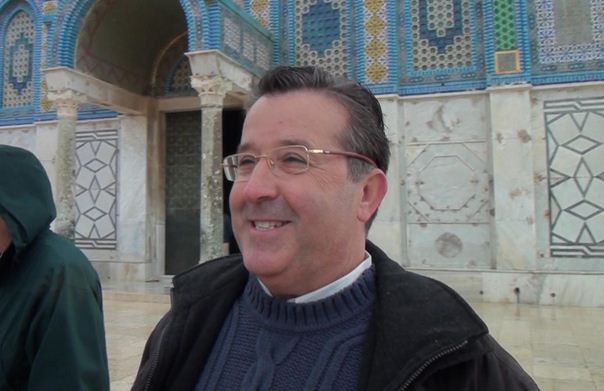
Dr. Ali Qleibo is an anthropologist, author, and artist. A specialist in the social history of Jerusalem and Palestinian peasant culture, he is the author of Before the Mountains Disappear, Jerusalem in the Heart, and Surviving the Wall, an ethnographic chronicle of contemporary Palestinians and their roots in ancient Semitic civilisations. Dr. Qleibo lectures at Al-Quds University. He can be reached at aqleibo@yahoo.com.